
My AI Workshops Story: From Voice AI Founder to AI Educator
How six startups, three of them in voice, a failed Techstars voice AI company, an AI employee for my wife's bookkeeping and one workshop in Berlin led to 80+ AI workshops for 10,000+ people, and to my new AI education company.
 Aemal Sayer · 12 min read
The short version
- I have built software for 25 years and companies for 18. Three of my six startups were in voice.
- My voice AI startup VoiceKitt went through Techstars in 2023, then ran out of runway in a risk-averse funding market.
- Building an AI employee that does my wife's DATEV bookkeeping in public led to talks at DATEV HQ and SAP HQ.
- One free workshop in Berlin on 15 March 2025 started it all: 80+ in-person AI workshops and 10,000+ people trained since.
- After an early exit from Avanai, I'm now launching my own AI education company, full time.
- 25 years
- building software
- 18 years
- as an entrepreneur, six startups
- 80+
- in-person AI workshops
- 10,000+
- people trained in person
- 48
- stops on the n8n World Tour
- #22
- Favikon: most influential on LinkedIn in Germany
Today I'm launching my new company: AI education, full time. After an early exit from Avanai, I want to tell the story of how I got here. It's a story about voice, about failing, about my wife's invoices, and about one workshop in Berlin that changed what I do every day.
Voice was always the thread
Three of my six startups were in voice. It started in 2016 with 24Geeks, a platform where you could find a developer 24/7. It was built for coding school students who got stuck at 11 pm and needed help right now. I had a co-founder, we raised a small business angel ticket, and then we bootstrapped it to profitability. It already had a lot of voice technology inside.

To understand my users, I went and taught at a coding school, DCI, for a year. That's where I learned how to teach. I didn't know then how much that year would matter later.
Then came zooc, an asynchronous voice AI tool: you sent audio, it was transcribed, understood and turned into tickets on a Kanban board. We launched on AppSumo and I ran it for years. One feature I still love: a Slack app that let you send voice messages inside Slack and read the transcript. That's a normal Slack feature today. In 2019, nobody had it, not even Slack.
In between, in my consulting work, there was almost always some voice, text analysis or natural language processing involved. By the end of the 2010s, I had six or seven years of voice technology behind me.
VoiceKitt, Techstars and Samantha
In January 2023, a few weeks after ChatGPT came out, I co-founded VoiceKitt, a voice AI agent. It was a natural fit. ChatGPT didn't even have function calling yet, so I wrote regular expressions to pull the right parts out of its answers to compose an email.
VoiceKitt connected to your tools. Picture a field salesperson driving to a meeting: VoiceKitt pulls the customer's details from Salesforce and briefs them on the way. After the meeting, while the memory is fresh, they just talk, and the notes go straight back into Salesforce.
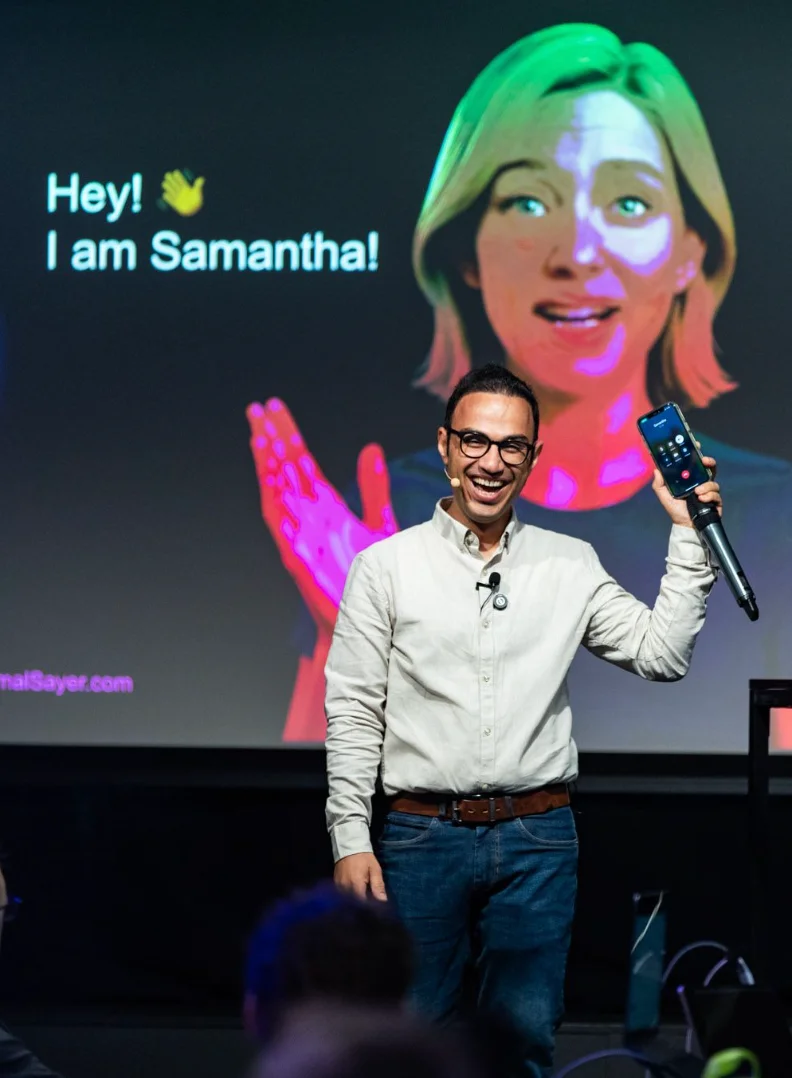
Our agent was called Samantha, after the AI in the film 'Her'. The name VoiceKitt came from KITT, the talking car from Knight Rider. We were lucky: we got into the Techstars accelerator.
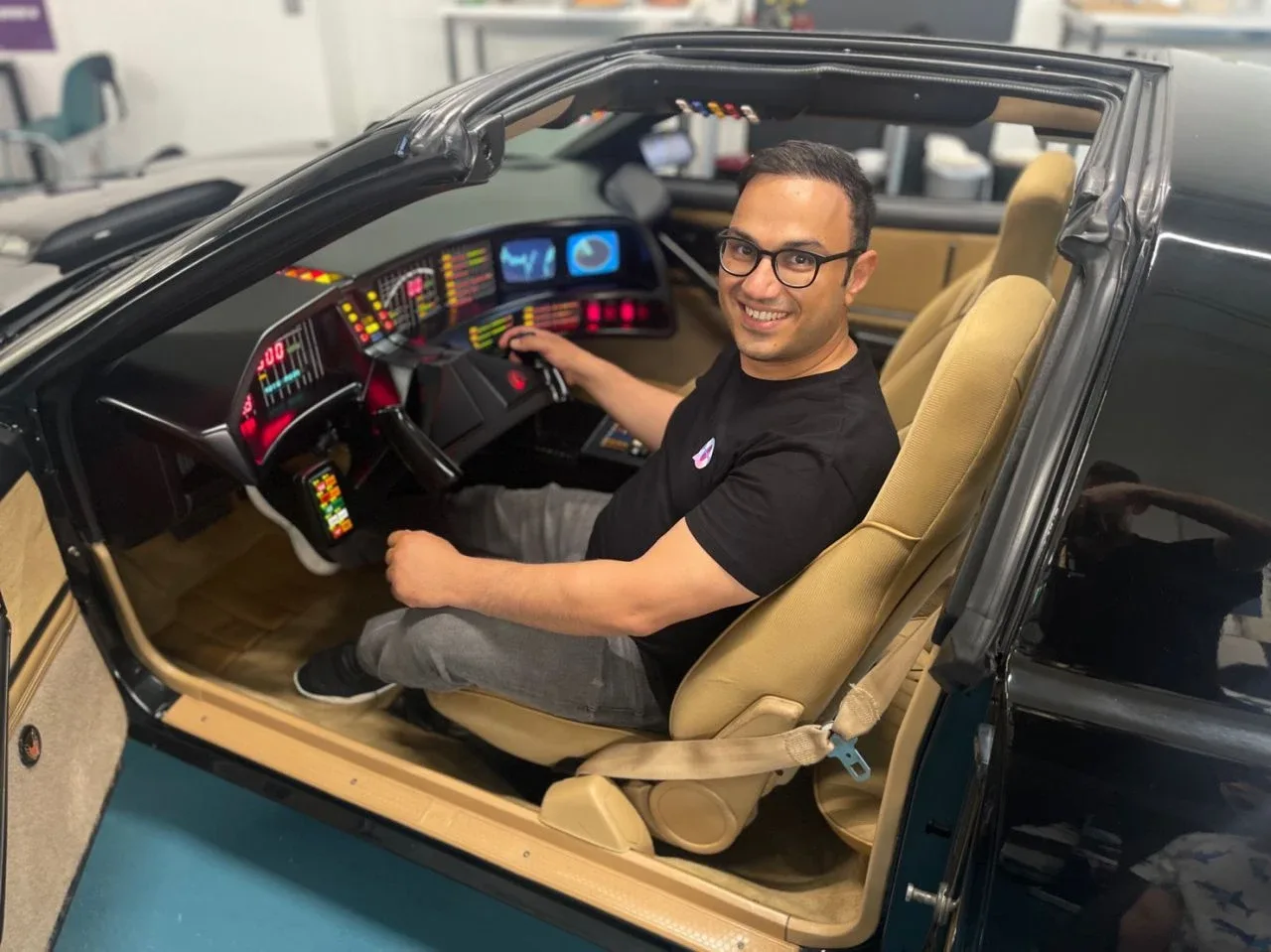
Watching my old stage videos again while preparing this launch, I noticed how early we were. It was the time companies like ElevenLabs were being born and growing in exactly the direction we were building. The full story, with videos and photos, is on the VoiceKitt page.
Why VoiceKitt didn't make it
After the $120,000 from Techstars, we couldn't find the next risk takers. I put a lot of my personal savings in, and in the end I had to liquidate the company.
2023 was a hard year to raise. European seed funding fell about 25% in the first quarter alone, and by the third quarter it was down to $1.4 billion from $2.1 billion a year earlier (Crunchbase). Many funds I met called themselves early stage, but asked for $100,000 or even $500,000 in monthly revenue before writing a ticket of $1 to $2 million. For a pre-revenue voice AI startup, that door was closed.
What burned me most: I still had an Afghan passport. I came to Germany from Afghanistan in 2015 for a master's in AI. With that passport I couldn't easily travel, and I couldn't raise money in the US. I wrote it all down in 40 reasons why my voice AI startup failed while Vapi and Bland AI are thriving.
The harder it is, the bigger the dragon, and the bigger the story.
An idea from Alex Hormozi I came back to many times
An AI employee for my wife's bookkeeping
I have four companies in Germany, and that means a lot of paperwork. My wife does the bookkeeping. Every month she spent a whole weekend, 10 to 15 hours, collecting invoices from different portals, uploading them to DATEV and reconciling them.
Right after Anthropic launched Computer Use, I was one of its first users. I wanted to understand how an AI actually clicks around a computer. So I built a simple clone and posted it on LinkedIn. It went viral, at least for someone with my follower count back then (the post). That gave me the push to build an AI agent for my wife's DATEV work, in public.
Every Sunday I went to the coworking space and recorded myself building it. Raw footage, zero editing. The first episode tells the story of my wife and the hours we wanted to give back to her.
The whole series is on my YouTube playlist. At the end of episode 1, I offered to build an AI agent for anyone in exchange for a two-minute video testimonial. A logistics company said yes, then their German client said no, and they were camera shy anyway. I had planned to hire a videographer with a drone for their warehouse. I didn't take the no as an answer. I kept building.
BlindClicks: how the AI employee worked
The agent needed its own computer. I've used Linux for about 15 years, and I found WebTop by linuxserver.io: a full Linux desktop that runs in a Docker container and shows up in a browser.
I called the project BlindClicks, because it really clicked blindly. In plain words, the architecture was simple:
- The computer: WebTop runs a Linux desktop (MATE) inside a Docker container.
- The hands: a small bridge built with robot.js and Electron sends real mouse clicks and key presses into that desktop.
- The training: another small Electron app records a process once. You click, click, click, and it saves the screen coordinates as a sequence of actions in JSON.
- The eyes: Microsoft's OmniParser turns screenshots into structured elements, so a language model knows what's on the screen.
- The brain: you give an instruction in plain language, an LLM understands the intent, and picks the right sequence of actions to run.
It worked. The weak spot: if a screen changed, a stored sequence could break. That limit taught me what really makes AI employees reliable, which I now teach in my workshops.
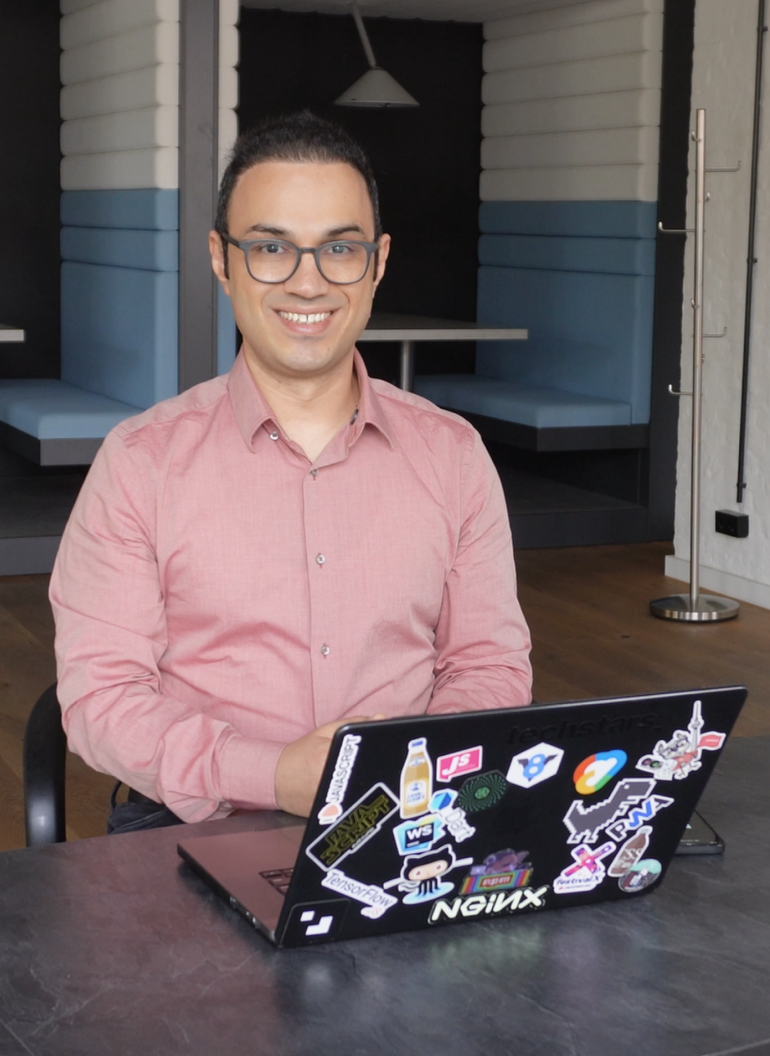
That project got me invited to present the architecture at DATEV HQ and SAP HQ. More on the DATEV story and the BlindClicks page.
15 March 2025: the workshop that started it all
The orchestration layer behind VoiceKitt's tool calling was n8n. I knew voice AI and n8n deeply, so I decided to show people how to build with them. I had no idea where it would take me.
My first workshop was on 15 March 2025 at CIC Berlin, sponsored by Æthos, a community committed to responsible AI. 75 people came. I showed them the idea of AI employees: AI that takes a task, works on it and reports back. That evening became my signature workshop.
Every workshop came with a video tutorial series as study material (the playlist for this one). I recorded the whole evening: all four hours are on YouTube. Here's the Luma page for the event that changed my life, and my LinkedIn post about it. Thank you, CIC Berlin and Æthos.
120 in the room, 200 online, 300 on the waitlist
The first workshop opened my eyes. The next one gave me a purpose. 120 people in the room, 200+ online, and more than 300 on the waitlist. Watching a room full of people build something they didn't think they could, that feeling was next level. It's why you see photos from that evening all over this website.
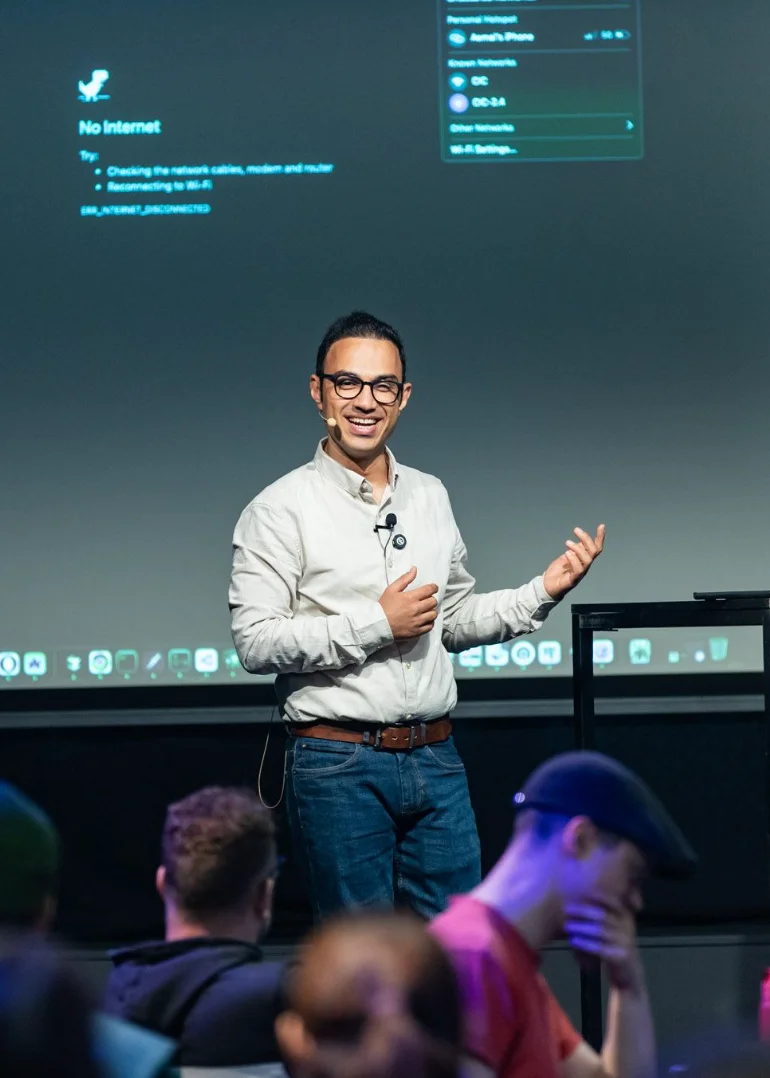
This is where I first introduced Samantha to a big audience:
The study material is in this playlist, the event is on Luma, and the live stream is still online. After this evening, Avanai happened, the world tour happened, and finally, this new company.
Hybrid workshops, airports and holidays
From then on, most of my workshops were hybrid: a room in Berlin plus an online audience. I gave one from inside an airport. Jan Oberhauser, n8n's CEO and co-founder, a tech entrepreneur I deeply respect and a fellow Berliner, reacted with a heart. That kept me going. I left a family holiday for a day to run another one.
Content was part of the work: tutorials, live streams and posts. I wrote about how my content strategy worked, and I was ranked #22 on Favikon's list of the 100 most influential people on LinkedIn in Germany.
Avanai, n8n and a world tour
Through these community events, I met Christian Voigt. Funny enough, my first in-person meeting with Jan is the same meeting where I met Christian, and it was innocently recorded on video. Together we built Avanai, an AI consulting firm that helps enterprise clients adopt AI agents.
Through our partnership with n8n, I got to work closely with Jan and with Bart from the n8n community team, one of the best community builders I know. Then came the n8n World Tour: 48 stops, more than 20 countries, from Turkey and India to Canada and the US.
One honest note. I couldn't teach the North American stops in person: I still had an Afghan passport at the time and couldn't travel to the US. Local trainers delivered my program and content there. Then my German citizenship came through. That October I went to San Francisco for SF Tech Week, and my eyes were opened.
Somewhere on that tour, in Paris, with a teacher's backpack on, I knew it: I'll become a full-time teacher. See every city on the world tour map, or the n8n World Tour case study.
The questions I heard everywhere
From India to San Francisco, the same questions came up in every room. What is an AI agent, really? Is a workflow with an LLM in it an AI agent? Will AI agents take our jobs?
My answer has been the same in every workshop: AI agents are your digital colleagues. They remember things, they use your tools, and they work on your behalf. They can call you and text you. I wrote about what makes something an AI agent, and about why Germany still runs on paper letters.
What's next: AI education, full time
After the world tour, I made an early exit from Avanai and sold my shares. Since then I've been building something at the intersection of everything above: voice AI like Samantha, AI employees that work like digital colleagues, and AI agents with their own computer in the cloud.
And I'm doing what I love most: teaching. Masterclasses, the AI Solo Founder Weekend, villa bootcamps, and workshop tours with my champions around the world. If you want to learn to build with AI, hands-on, in a small group, come to a workshop. And tonight, come to the launch night.
Questions and answers
Who is Aemal Sayer?
Aemal Sayer is an AI educator and founder based in Berlin. He has built software for 25 years, founded six startups over 18 years, three of them in voice, and has run 80+ in-person AI workshops for more than 10,000 people.
What is an AI employee?
An AI employee is an AI agent that works like a digital colleague: it takes a task, uses your tools, remembers what it did, and reports back. Some, like Aemal's voice AI manager Samantha, can also call or text you.
What was VoiceKitt?
VoiceKitt was a voice AI agent startup Aemal co-founded in January 2023. It went through the Techstars accelerator and let field salespeople talk to Salesforce by voice. It closed after it couldn't raise its next round.
What is BlindClicks?
BlindClicks was Aemal's AI agent with its own Linux computer (WebTop in Docker). It used Microsoft's OmniParser to read the screen, an LLM to understand instructions, and recorded click sequences to do DATEV bookkeeping tasks.
When was Aemal Sayer's first AI workshop?
On 15 March 2025 at CIC Berlin, sponsored by Æthos, with 75 people. It became his signature workshop on AI employees.
Where can I join one of Aemal's AI workshops?
Upcoming masterclasses, the AI Solo Founder Weekend and villa bootcamps are listed at aemalsayer.com/events, in Berlin, online and in other cities.
More from the journey
- Will AI agents take our jobs?
- How AI agents could give my wife 9 hours back
- My first announcement of an AI workshop
- One of my first workshops
- My masterclass on the EU AI Act
- A Gary Vee clone: an early AI employee experiment
- Behind the scenes of recording workshop study material
- The study material for the 120-person workshop
- A hybrid workshop, live